Getting Around in Montréal
Montréal is a very car-free-friendly city! We really recommend walking, using transit, and taking bikes or bikeshares to get around. There are many separated bike lanes and transit is generally quite reliable.
Montréal is generally considered quite safe to walk in, even at night, regardless of gender. Of course, it is still a major city, but there aren’t many particular issues to watch out for.
Rideshares like Lyft and Uber are also available; there are also city taxis which are clearly marked.
Glossary
Metro - subway, underground
REM (Réseau express métropolitain) - light rail, separated tram, runs underground through downtown and under the mountain
Bixi - short term bike rental service run by the city of Montreal
Venue
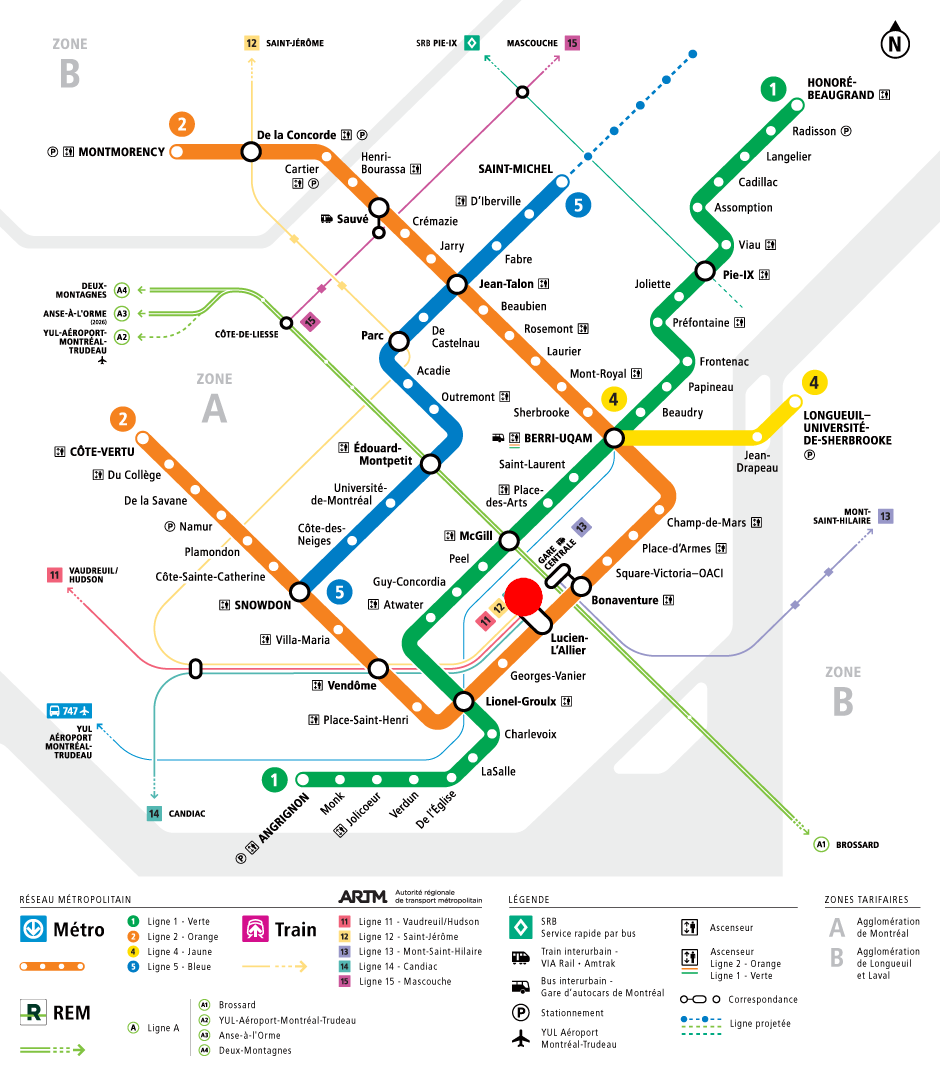
FAccT will be hosted at Le Centre Sheraton, shown on map in red. The closest transit stops are:
- René-Lévesque / Drummond (1 min walk, East-bound buses including bus from Airport)
- René-Lévesque / Rue de la Montagne (1 min walk, West-bound buses including bus to Airport)
- Bonaventure (8 min walk through the tunnel at Stanley and Rue des Canadiens, Orange Line)
- Peel (8 min walk through tunnel on Stanley or on the street, Green Line)
- Gare Centrale (8min walk through Montreal underground entrance on rue Mansfield, REM and Intercity Trains)
- Lucien L’Allier (10 minute walk through entrance on Rue de la Montagne)
Airport
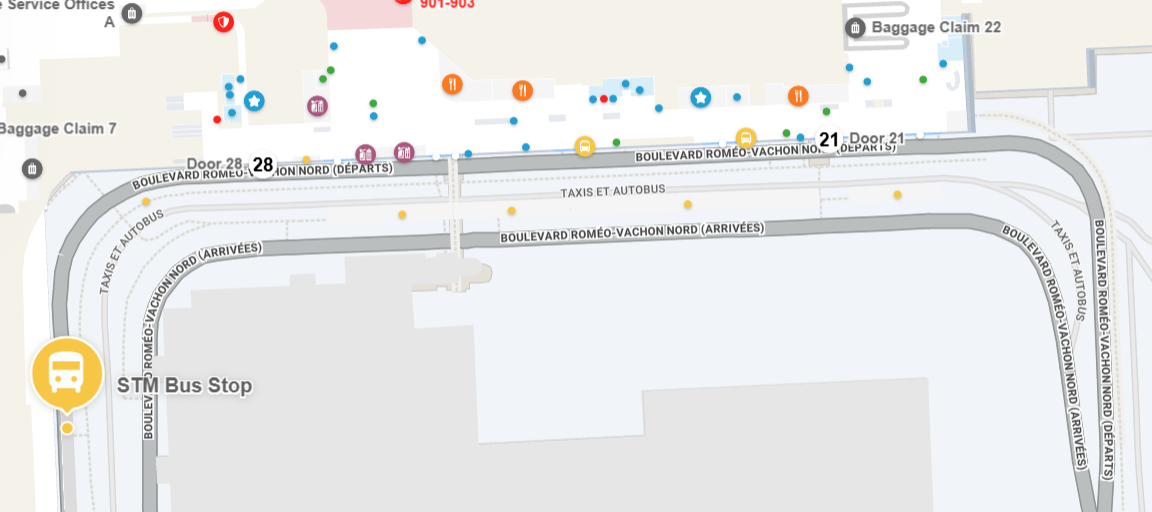
Montreal has an express bus (747) that goes in a designated lane from YUL to Downtown, directly in front of the venue. It takes approximately the same amount of time (35 minutes) to take the 747 as to rideshare at a fraction of the expense. Buses are equipped with luggage racks. To ride, you need at least a 24-hour pass ($11.25), which you can buy at the kiosks near Door 28 or in the Chrono app. The bus stop is located to your right as you leave Door 28. The bus comes every 10-15 minutes and you should board route 1 to the Gare d’autocars de Montréal.
Cost
Note: all prices are in Canadian Dollars!
A single ride on the Metro or REM costs $3.75. (Note that a single ride includes free transfers between different modes of transit—see the accepted free transfer types here!) You should only be buying fares in Zone A since you are not (likely) leaving the island of Montreal. For a full fare schedule, see the STM website.
To board the 747 bus to and from the airport, you must have to purchase at least a 24-hour pass ($11.25). The 24-hour period starts the first time you scan the ticket.
If you are departing on or before Sunday June 28th, I recommend the Weekly fare ($32), which will cover your fare to and from the airport, as well as any travel in between.
If you are departing on Monday June 29th, I recommend purchasing two 3-day fares ($21.75x2= $43.5).
If you do not think you will leave the area of the venue much, you can purchase two 24-hour fares ($11.25x2= $22.5) to get to and from the airport.
Bixi bikeshares will cost $1.60 per ride + $0.21 per minute, either through the station terminal or through the Bixi app. You can also get monthly membership for $24 for unlimited 45 minute rides but remember to cancel it after you leave Montreal.
Trip Planning
Apps
The recommended apps from the STM (Montréal’s transit agency) are Chrono (Montréal-specific) and Transit. Both are relatively reliable in terms of expected bus and metro arrival times. (Google maps works too for trip planning, but is less reliable.)
To use Bixi, you may want to download the Bixi app to reserve bikes, though bikes can also be reserved at the station terminal with a credit card.
Accessibility
- All Montréal buses are kneeling buses, and most have designated places within the bus for wheelchair users or people with strollers to brace during transit.
- 30 of Montréal’s metro stations are equipped with elevators, but they are unfortunately not always in working order. Most stations also have escalators for some, but not all, of the stairways, but these are sometimes broken as well. More information on metro accessibility, including where to find elevators in individual stations, is available on the STM’s Elevator Access to the métro page.
Metro etiquette
Montréal has particular metro and bus etiquette. Most of this information is probably not new to you if you take transit elsewhere regularly, but it’s good to know!
- On the bus
- When waiting for the bus, people often do line up in neat lines! You will get dirty looks if you cut the line, so try not to :)
- Always request your stop using the “stop request” button or the yellow cord, whichever the bus has. The bus may not stop otherwise!
- Stops are short. It’s expected that you will be at your door class="c19">prior to the bus stopping and ready to disembark. If you can’t get to the door in time, shout for the bus driver to reopen them.
- As a corollary to the above, do not block the doors! This includes not standing in the back door well if you can avoid it.
- On the métro
- If on the metro: it’s expected that you will be at your door prior to the metro stopping.
- If waiting on the platform: stand aside to let those inside disembark before getting on!
Miscellaneous information
- As a rule, métro (underground) timing is almost always more reliable than buses. Métro service usually runs every 3 minutes during rush hour, every 6 minutes during most of the day, and every 8 minutes late at night and on Sundays.
- Many stations on the métro have many exits, which may be located rather far from one another. It’s a good idea to check which exit you need to take in advance!